01
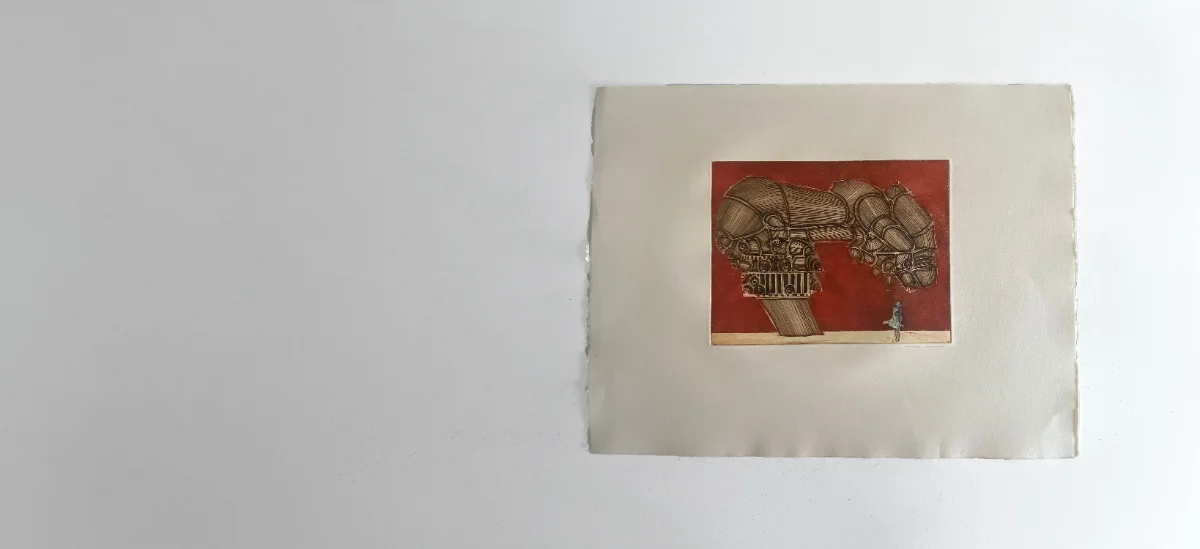
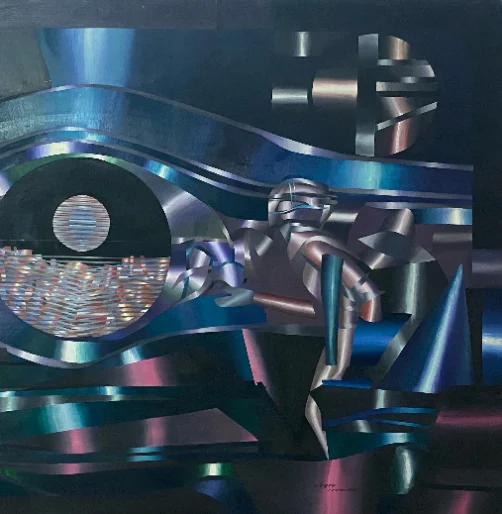
El hombre y la máquina
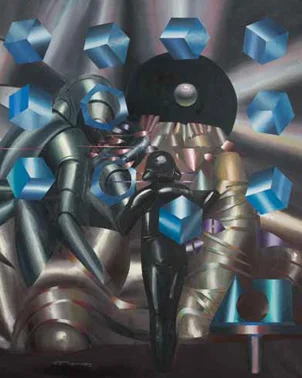
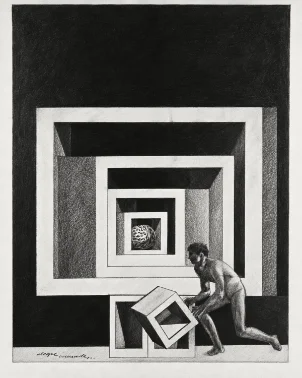
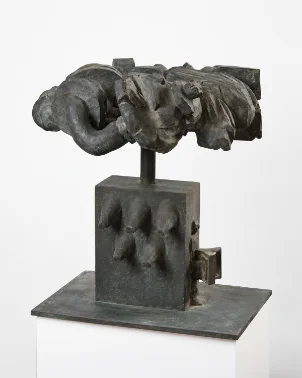
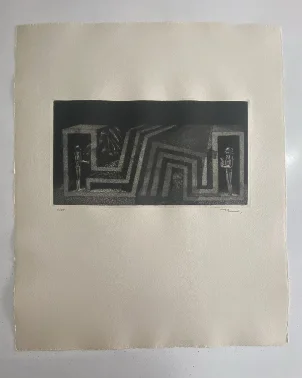
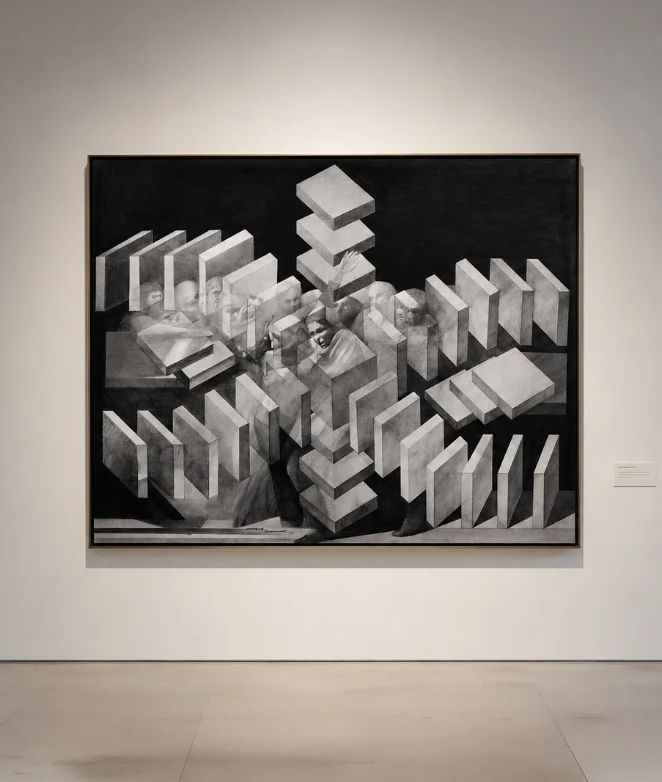
El cuerpo humano frente al mecanismo y a las estructuras que desbordan al hombre.

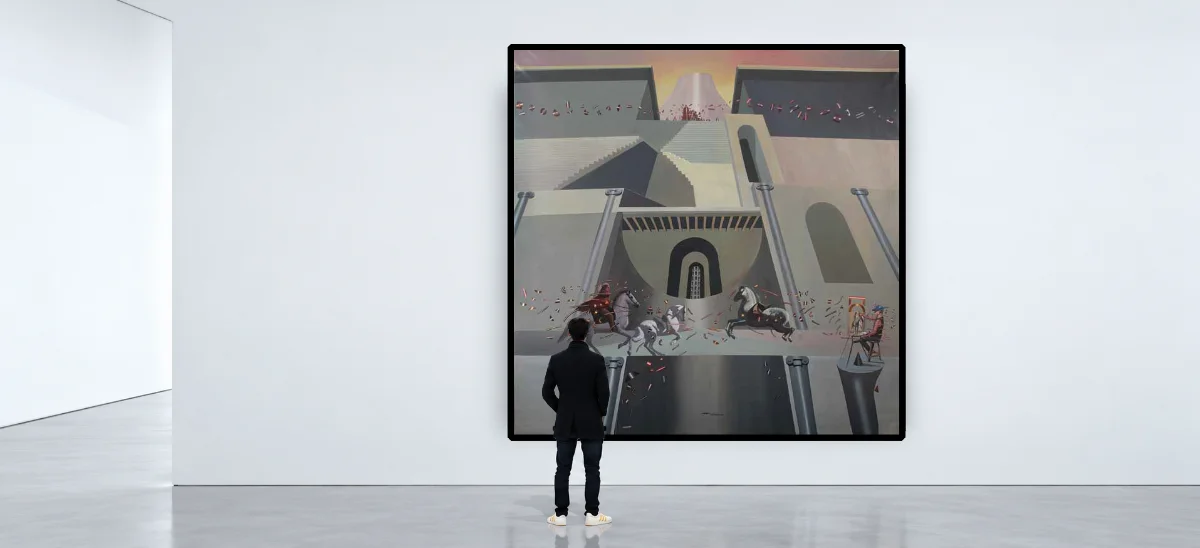
Antonio Alegre Cremades · 1939–2006
Semblanza
Antonio Alegre Cremades (1939-2006) fue artista, catedrático, ingeniero y académico. Su obra y su pensamiento dieron forma a una visión propia del arte contemporáneo en la segunda mitad del siglo XX. Su vida y su trabajo se movieron siempre entre lo técnico y lo simbólico, arraigados en las transformaciones sociales de su tiempo.
Ingresó en Ingenieros Industriales en 1956 y en la Escuela Superior de Bellas Artes de San Carlos en 1957, y cursó ambas carreras a la vez. En 1964 obtuvo el título de Ingeniero Industrial, especialidad máquinas eléctricas, y ese mismo año ganó el Primer Premio de Grabado en el concurso nacional de la Dirección General de Bellas Artes.
En su investigación artística asumió las vanguardias y las introdujo en su obra, respondiendo al arte conceptual y a la abstracción con un lenguaje figurativo propio. A lo largo de cinco décadas creativas, de los años sesenta a los dos mil, hizo el viaje que va de los clásicos a la superación de las vanguardias, asumiéndolas como un lenguaje —como un alfabeto— que le permitió construir sus propias composiciones y reinterpretar, desde su mirada, la historia del arte.
En la década de 1970, anticipó y reflejó en su obra la irrupción de la Inteligencia Artificial y el imparable avance de la interacción entre la tecnología y los seres humanos. Ver obra →
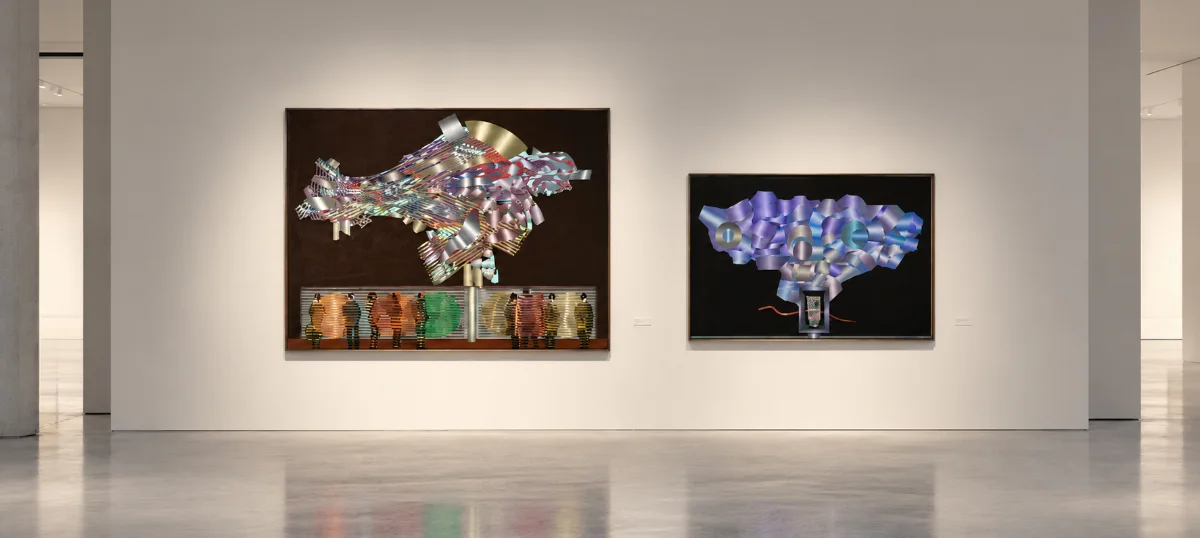
Arranca en los años setenta, en su estudio del barrio de Sarrià en Barcelona, mientras España pasaba de la dictadura a la democracia. La concibió como un aviso sobre lo que la tecnología iba a hacerle al ser humano, mucho antes de que eso fuera una conversación pública.
El crítico Vicente Aguilera Cerni la describió en 1974 como una simbología conectada con situaciones reales «o lógicamente previsibles»: separaciones laberínticas, construcciones mecánicas que crecen con autonomía propia, y la anulación del individuo dentro de la multitud.
«Alegre Cremades representa la alianza entre la sensibilidad sociológica y las previsiones de la ciencia-ficción.»
Vicente Aguilera Cerni, 1974
Presidente de la Asociación Española de Crítica de Arte (1984-1996)
Las series
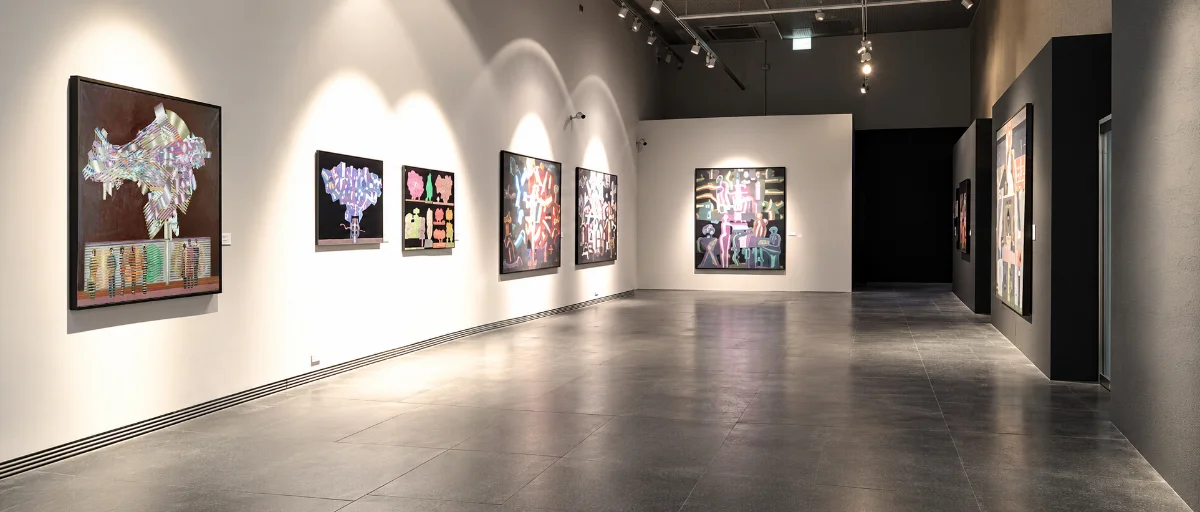
Las vanguardias fueron un campo de exploración que reinterpretó desde una formación clásica y una visión independiente.
El cuerpo humano frente al mecanismo y a las estructuras que desbordan al hombre.
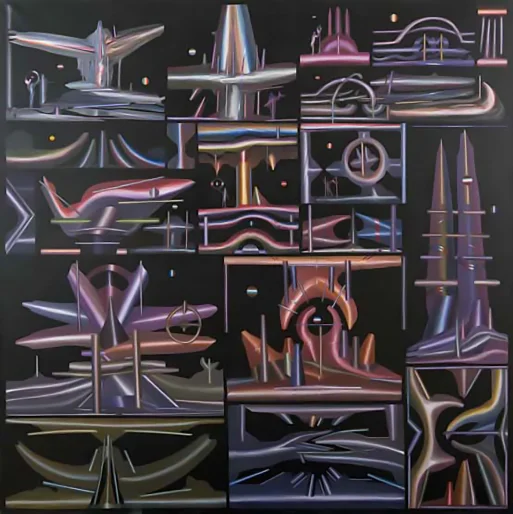
La transición. El mecanismo deja de ser exterior y pasa a ser estructura mental.
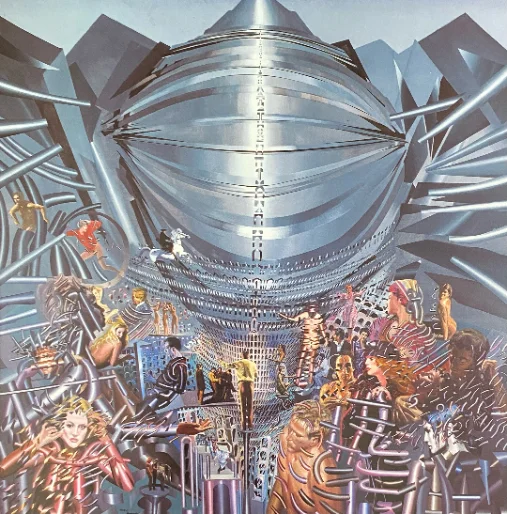
La torre, la arquitectura imposible, el hombre como torre de comunicaciones.
Antonio Alegre Cremades · 1939–2006
Life and work
Antonio Alegre Cremades (1939–2006) was a Spanish artist, professor, engineer and academic. His work and thought shaped a vision of his own within the contemporary art of the second half of the twentieth century. His life and his practice moved between the technical and the symbolic, always rooted in the social transformations of his time.
He enrolled in Industrial Engineering in 1956 and in the Higher School of Fine Arts of San Carlos in 1957, and studied both at once. In 1964 he qualified as an industrial engineer specialising in electrical machines — and that same year won First Prize in Engraving in the national competition of the Directorate General of Fine Arts.
In his artistic research he took on the avant-gardes and brought them into his own work, answering conceptual art and abstraction with a figurative language of his own. Across five creative decades, from the 1960s to the 2000s, he travelled from the classics to the overcoming of the avant-gardes, taking them as a language — as an alphabet — that allowed him to build compositions of his own and to reinterpret the history of art through his own eyes.
In the 1970s he anticipated and reflected in his work the emergence of Artificial Intelligence and the relentless advance of the interaction between technology and human beings. See the work →
It began in the 1970s, in his studio in the Sarrià district of Barcelona, while Spain was moving from dictatorship to democracy. He conceived it as a warning about what technology was going to do to human beings, long before that became a public conversation.
In 1974 the critic Vicente Aguilera Cerni described it as a symbolism connected with real situations «or logically foreseeable» ones: labyrinthine separations, mechanical constructions that grow with an autonomy of their own, and the annulment of the individual within the crowd.
«Alegre Cremades represents the alliance between sociological sensibility and the predictions of science fiction.»
Vicente Aguilera Cerni, 1974
President of the Spanish Association of Art Critics (1984-1996)
The series
The avant-gardes were a field of exploration that he reinterpreted from a classical training and an independent vision.
The human body set against the mechanism, and against structures that overwhelm it.
The turning point. The mechanism stops being external and becomes a mental structure.
The tower, the impossible architecture, man as a communications tower.